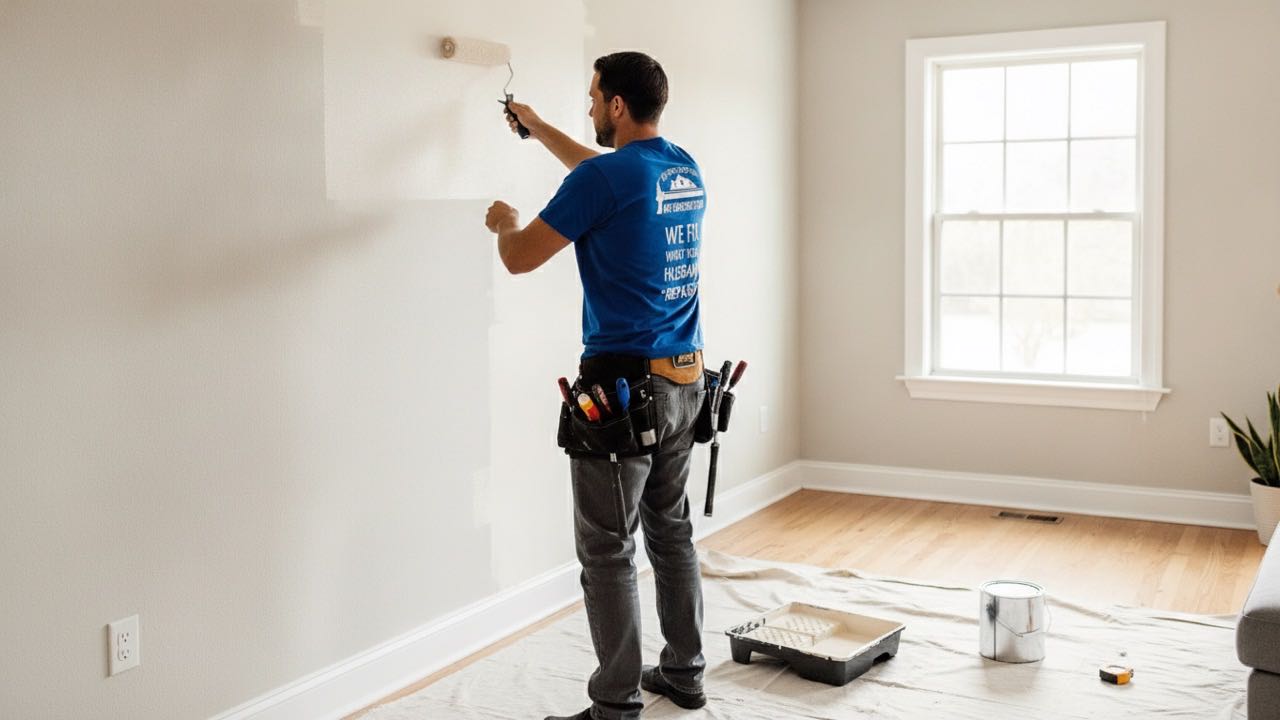
House Painting in Round Rock, TX
On a nineties Round Rock exterior, the paint is the easy part. What's underneath the paint decides how long it lasts.
Plenty of homes in the older Round Rock neighbourhoods were built with hardboard or engineered-wood siding and trim rather than fibre cement. It was standard for the era and it works fine as long as it stays sealed. Where it fails is at the bottom edges, at butt joints, and anywhere a gutter has been overflowing quietly for a few years — the material absorbs water, swells, and starts to delaminate.
Painting over that does nothing. The new coating fails from behind within a couple of seasons and the homeowner concludes the paint was bad.
So on any older Round Rock exterior we quote, the first thing we do is walk the elevations and press on the trim. What we find determines whether you're buying a paint job or a repair-and-paint job, and we'd rather have that conversation before you've committed.
Siding and Trim Repair Before Anything Gets Coated
The places to check are consistent: the bottom two courses of siding, the trim boards where they meet a horizontal surface, the joints behind downspouts, and any fascia under a section of gutter that overflows.
Sound material is firm and rings solid. Failed material is soft under thumb pressure, or visibly swollen along an edge, or shows the layered separation that gives hardboard its nickname. Replacing the affected boards is a modest carpentry cost. Coating over them is money set on fire.
We price repair as its own line rather than folding it into a square-foot paint number, so you can see exactly what the substrate work costs and decide on it separately.
The other item we always check is caulking at the windows and at trim junctions. Old, cracked, hardened caulk is where water gets in, and re-caulking properly before painting is genuinely more important to the life of the finish than which brand of paint goes on top.
Which Elevations Fail First, and Why
Every Round Rock exterior we've repainted fails in the same order: south and west first, north and east years later.
That's simply sun. The south and west elevations take the summer afternoon load and the coating degrades there while the shaded sides still look fine. It's why a house can look perfectly acceptable from the street and be chalking badly around the side.
Two practical consequences. First, when we quote a full exterior we price it as a full exterior, because painting only the failed elevations produces a house with two visibly different ages of paint and buys a couple of years at best. Second, product selection matters more on those elevations than anywhere else — a quality acrylic with good UV resistance genuinely outlasts a budget line here, and the labour cost of doing the job is identical either way.
We'll tell you what we'd put on our own house and why, and we'll price the alternative if you'd rather.
Interiors: Cabinets, Ceilings and Full Repaints
Inside, the highest-return painting project in an older Round Rock home is almost always the kitchen cabinets. Solid-wood face-frame cabinets — which a lot of the Forest Creek and Stone Canyon stock has — take paint beautifully, and the transformation from honey oak to a modern finish costs a fraction of replacement.
It is not a roller job. Done properly the doors come off and get sprayed, the boxes get masked and sprayed in place, and the whole thing is degreased, sanded and primed with a bonding primer first. Kitchen cabinets carry decades of cooking residue and paint will not stick to it. That prep is most of the labour and all of the durability.
For full interior repaints, the main variable is ceilings. If the house still has a textured popcorn ceiling, removing it before painting is a separate, messy, worthwhile project that changes the room far more than the wall colour does — and it's the moment to do it, because doing it after new paint means repainting.
What We Have Actually Quoted in Round Rock
Across every priced estimate we have written for a Round Rock address — 49 of them, covering all our services rather than painting alone.
These are estimates we wrote, not final invoices, and they mix small repairs in with full renovations — which is why the spread is wide. We deliberately do not publish a painting-only median for Round Rock: the sample for a single service in a single city is too small to mean anything honest. Your number comes from a free on-site walkthrough.
Painting in Round Rock: Common Questions
My Round Rock trim looks swollen at the bottom. Can you just paint over it?
No, and we won't quote it that way. Hardboard and engineered-wood siding and trim, which are common in older Round Rock neighbourhoods, absorb water once the seal fails and then delaminate. Coating over failed material means the new paint releases from behind within a couple of seasons. The affected boards need replacing first. We price that repair as a separate line so you can see what it costs on its own.
Can I paint just the sides of the house that look bad?
You can, but we usually advise against it. South and west elevations fail years before north and east because of the afternoon sun load, so a partial repaint leaves you with two visibly different ages of paint on the same house and buys a couple of years. If budget is the constraint we'd rather talk about product tier across the whole house than about doing half of it.
Can you paint my kitchen cabinets instead of replacing them?
If they're solid-wood face-frame construction — which much of the older Round Rock stock is — yes, and it's one of the best-value projects in the house. Done properly the doors come off and are sprayed, the boxes are masked and sprayed in place, and everything is degreased, sanded and bonding-primed first. That prep is most of the labour and all of the durability. If the boxes are particleboard with a laminate skin, we'll tell you painting isn't worth it.
How long does an exterior repaint take in Round Rock?
A typical single-family Round Rock exterior runs about 4–7 days of good weather for wash, prep, caulk and two coats. Add days if siding or trim repair is needed, and add drying time in humid weeks. We schedule around the forecast rather than pushing coats onto damp surfaces, and we'll move a day rather than compromise the finish.