Handyman Services in Round Rock, TX
One visit, one crew, one invoice — for the list on the fridge that's been growing since spring.
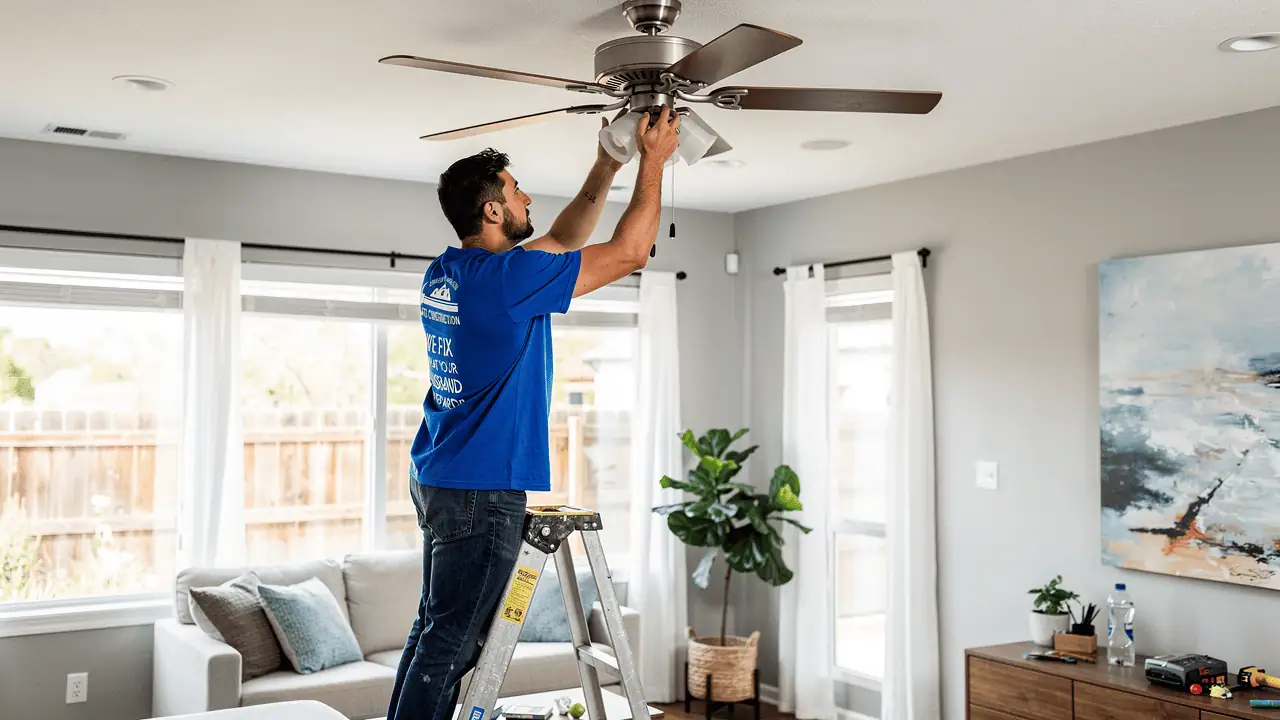
Most handyman calls we take in Round Rock aren't one job. They're eleven jobs: a door that doesn't latch, a ceiling fan that wobbles, two rooms of baseboard that need re-caulking, a towel bar that pulled out of the drywall, an attic hatch that won't sit flush, a gate that drags, and a list of things the previous owner half-finished.
Handling that as a single scheduled visit is dramatically more efficient than treating each item as its own call-out, and it's how we price it. A tradesman on site for a full day gets through a genuinely long list; the same tradesman making six separate trips spends most of the time in a truck.
So when you call, tell us everything. Not just the thing that finally prompted the call.
Doors That Stick, Doors That Won't Latch
This is the single most common item on a Round Rock repair list, and there's a useful distinction between the two symptoms.
A door that rubs the jamb along one edge has usually just dropped slightly — hinge screws have worked loose in the frame over years of use. The fix is often as simple as replacing the top hinge screws with longer ones that reach past the jamb into the stud behind it. Ten minutes, and it pulls the whole door back into square.
A door that closes but won't latch is a different problem: the frame has moved relative to the door, and the strike plate is no longer where the latch is. That's a strike plate adjustment, sometimes with a chisel to enlarge the mortise, sometimes just moved a few millimetres.
Neither needs a new door, which is what people often assume. On a repair list we'll usually get through every door in the house in an hour or two.
Drywall Repair That Doesn't Show
The difference between an acceptable drywall repair and an invisible one is entirely in the finishing, and it's mostly about how wide you're willing to go.
A patch floated out four inches will always read as a slight bump in raking light. The same patch floated out ten or twelve inches, feathered properly, sanded and primed, disappears. It's the same materials and maybe twenty extra minutes, and it's the whole difference between a repair you notice and one you don't.
The other half is texture matching. Most Round Rock homes have a knockdown or orange-peel wall texture, and a smooth patch in the middle of it is as obvious as no patch at all. Matching it means spraying the texture and knocking it back at the right moment — a judgement call that comes with having done a lot of them.
Then priming before painting, because fresh compound absorbs paint differently and an unprimed patch shows through the finish coat as a dull spot.
What We'd Rather You Called a Specialist For
We'll tell you when something isn't a handyman job.
Anything involving the electrical panel, adding circuits, or aluminium branch wiring — which turns up in some Central Texas housing of a certain era — goes to a licensed electrician. Replacing a fixture on an existing circuit is routine handyman work. Changing what feeds it is not.
Gas appliance connections go to a licensed plumber. Repiping and anything inside a wall that carries supply pressure goes to a licensed plumber. Clearing a slow drain or replacing a trap is ours.
Roof work beyond a small, safe, accessible repair goes to a roofer, and anything structural goes through our general contracting side with permits and engineering as required.
We'd rather point you to the right trade and keep the rest of your list than take on something that ought to be licensed. It's also why we can quote the list honestly — you get told what we're not doing before the day starts, not at the end of it.
What We Have Actually Quoted in Round Rock
Across every priced estimate we have written for a Round Rock address — 49 of them, covering all our services rather than handyman alone.
These are estimates we wrote, not final invoices, and they mix small repairs in with full renovations — which is why the spread is wide. We deliberately do not publish a handyman-only median for Round Rock: the sample for a single service in a single city is too small to mean anything honest. Your number comes from a free on-site walkthrough.
Handyman in Round Rock: Common Questions
Is there a minimum job size for handyman work in Round Rock?
No minimum and no travel fee anywhere in Round Rock — Forest Creek, Teravista, Paloma Lake, Stone Canyon, Vista Oaks and Brushy Creek included. That said, the economics work much better for you if small items are batched. A tradesman on site for a scheduled half or full day gets through a long list; the same work spread over separate visits costs more for the same result.
My interior doors stick and won't latch. Do I need new doors?
Almost never. A door rubbing along one edge has usually dropped because hinge screws have loosened in the frame — replacing the top hinge screws with longer ones that reach the stud behind pulls it back square, and takes minutes. A door that closes but won't latch needs the strike plate adjusted because the frame has moved. Both are quick fixes and we'll typically do every door in the house in an hour or two.
Will a drywall patch be visible after painting?
Not if it's finished properly. The patch needs floating out 10–12 inches and feathering rather than the four inches that's quicker, the wall texture — usually knockdown or orange peel in Round Rock — needs matching, and the repair needs priming before paint because fresh compound absorbs differently and shows through as a dull spot otherwise. Same materials, a bit more time, completely different result.
What won't you take on as handyman work?
Anything at the electrical panel, new circuits, or aluminium branch wiring goes to a licensed electrician — swapping a fixture on an existing circuit is fine, changing what feeds it isn't. Gas connections and pressurised supply work inside walls go to a licensed plumber. Roof work beyond a small accessible repair goes to a roofer, and structural work goes through our general contracting side with permits. We tell you before the day starts, not at the end.