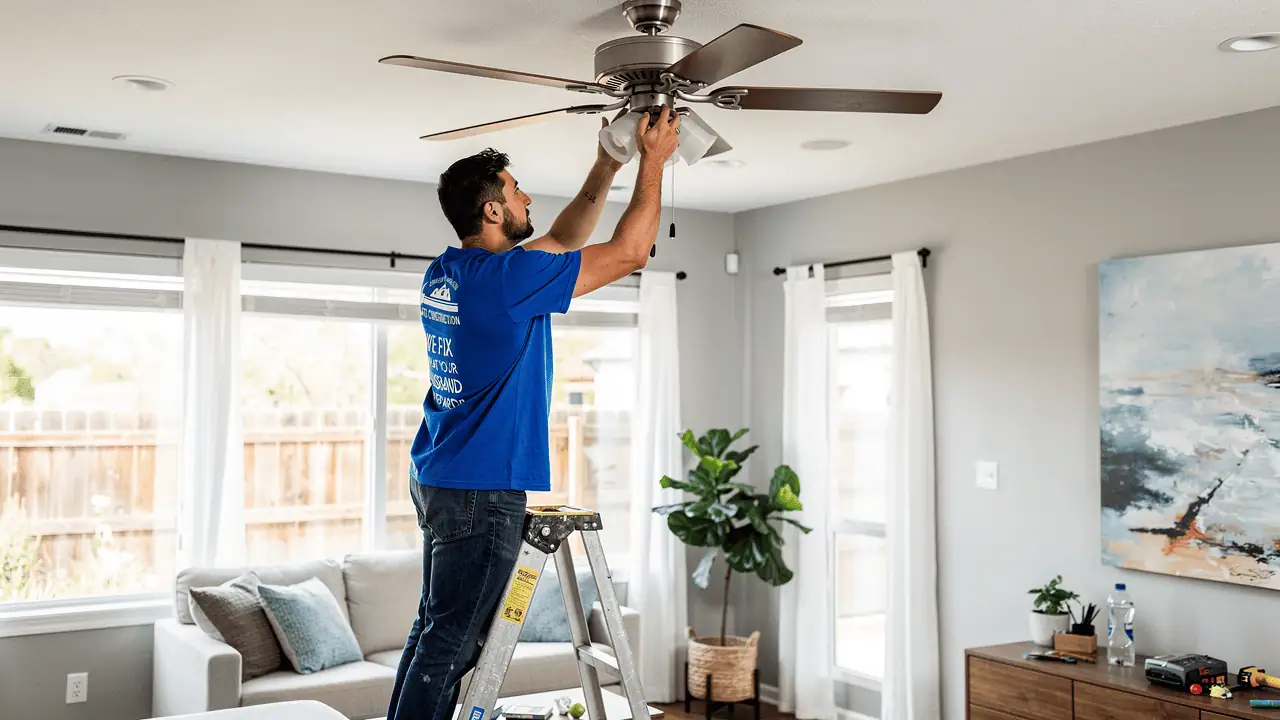
Handyman Services in Leander, TX
In a newer Leander home there's usually nothing broken. There's just a long list of things the builder never did.
Handyman work in Leander looks different from handyman work in an older suburb, because the housing stock is young. Nothing is worn out. What these houses have instead is a list of things that were never installed in the first place, plus the small defects that show up as a new home dries out and settles.
So the typical Leander visit is part upgrade and part punch list: mount the television and hide the cables in the wall, put real shelving in the pantry and the closets, get the garage off the floor and onto the walls, replace the builder blinds, swap the builder fixtures for something chosen rather than allocated, and deal with the nail pops and caulk gaps that have appeared since move-in.
It's the highest-satisfaction handyman work we do, because none of it is fixing a problem — it's finishing a house.
TV Mounting and In-Wall Cable Runs
The most requested single item in Leander. Done properly it means the television sits flat against the wall with nothing visible beneath it, and doing it properly has two parts.
The mount goes into studs, located and verified rather than guessed at, with hardware rated well beyond the weight of the screen. Drywall anchors are not an acceptable answer for a large television regardless of what the packaging claims. Over a fireplace — which is where a lot of these open-plan Leander family rooms want it — we check what the wall is actually built from first, because a stone or masonry chase needs different fixings entirely.
Cables then run inside the wall between two low-voltage brackets, with power handled by a proper in-wall rated kit rather than by running an extension lead inside the cavity, which is both a fire risk and a code violation.
It's an hour or two of work and it's the difference between a mounted television and a mounted television with a bundle of cables hanging down the wall.
Storage: Closets, Pantries and Garages
Production builders fit a single wire shelf with a hanging rail in every closet and call it storage. It's the most common thing we're asked to replace in Leander.
A proper closet build — double hanging at different heights, adjustable shelving above, a shoe run, drawers where they earn their space — roughly doubles the usable capacity of the same cupboard. Pantries are the same story: one deep shelf that things get lost at the back of, replaced with graduated shelf depths and pull-out drawers at the bottom.
Garages are the biggest opportunity and the most neglected. In a house with limited attic access — common in newer plans with engineered trusses — the garage is the storage, and getting it onto the walls and overhead rather than stacked on the floor recovers a genuine parking space. Overhead racks need fixing into the trusses correctly, with attention to the rated load, which is the part worth having done rather than attempted.
These are all straightforward jobs. They're just ones that never get to the top of the list on their own.
Builder Punch-List Items After the Warranty Window
Every new home develops a set of small cosmetic defects in its first couple of years as the framing dries out. Inside the builder's warranty period, those are the builder's to fix and you should absolutely use that. After it closes, they become yours, and they're all straightforward.
Nail pops, where drywall screws telegraph through as small round bumps: re-secure the board beside the fastener, fill, sand, prime. Filling over the bump without re-fastening means it returns.
Caulk lines opening at baseboards, door casings and where trim meets tile: cut out the split caulk and re-run it properly rather than laying a second bead over the first.
Interior doors that have gone slightly out of adjustment: hinge screws and strike plates, the same as anywhere.
Grout that's cracked in a shower corner: replace it with a flexible sealant rather than more grout, because that joint is designed to move.
We usually get through the whole set in a single visit, and it's worth doing before a repaint rather than after.
What We Have Actually Quoted in Leander
Across every priced estimate we have written for a Leander address — 32 of them, covering all our services rather than handyman alone.
These are estimates we wrote, not final invoices, and they mix small repairs in with full renovations — which is why the spread is wide. We deliberately do not publish a handyman-only median for Leander: the sample for a single service in a single city is too small to mean anything honest. Your number comes from a free on-site walkthrough.
Handyman in Leander: Common Questions
Can you mount a TV over the fireplace in my Leander home?
Usually yes, but we check what the wall is built from first. A framed chase takes a stud-mounted bracket normally; stone or masonry needs different fixings entirely. Cables run inside the wall between low-voltage brackets, and power goes through a proper in-wall rated kit — running an extension lead inside a wall cavity is a fire risk and a code violation, whatever the internet says. Drywall anchors are never the answer for a large screen.
Can you replace the wire shelving in my closets and pantry?
Yes, and it's one of the best-value jobs in a newer Leander home. Builders fit a single wire shelf and rail as standard. Replacing it with double hanging at different heights, adjustable shelving above and a shoe run roughly doubles usable capacity in the same space. Pantries get graduated shelf depths and pull-outs at the bottom so nothing is lost at the back.
Should the builder fix my nail pops, or should I?
If you're still inside the builder's warranty period, use it — that's what it's for. Once it's closed they're yours, and they're simple: re-secure the drywall next to the popped fastener, then fill, sand and prime. Filling over the bump without re-fastening the board means it comes back. We handle the whole set in one visit, and it's worth doing before a repaint rather than after.
Do you install overhead garage storage racks?
Yes. In newer Leander plans with engineered roof trusses, attic storage is often limited or unusable, which makes the garage the real storage space. Overhead racks have to be fixed into the trusses correctly and loaded within their rating — that's the part worth having done properly rather than attempted, because a rack that pulls out takes the ceiling with it. We'll also do wall systems for tools and equipment at the same visit.