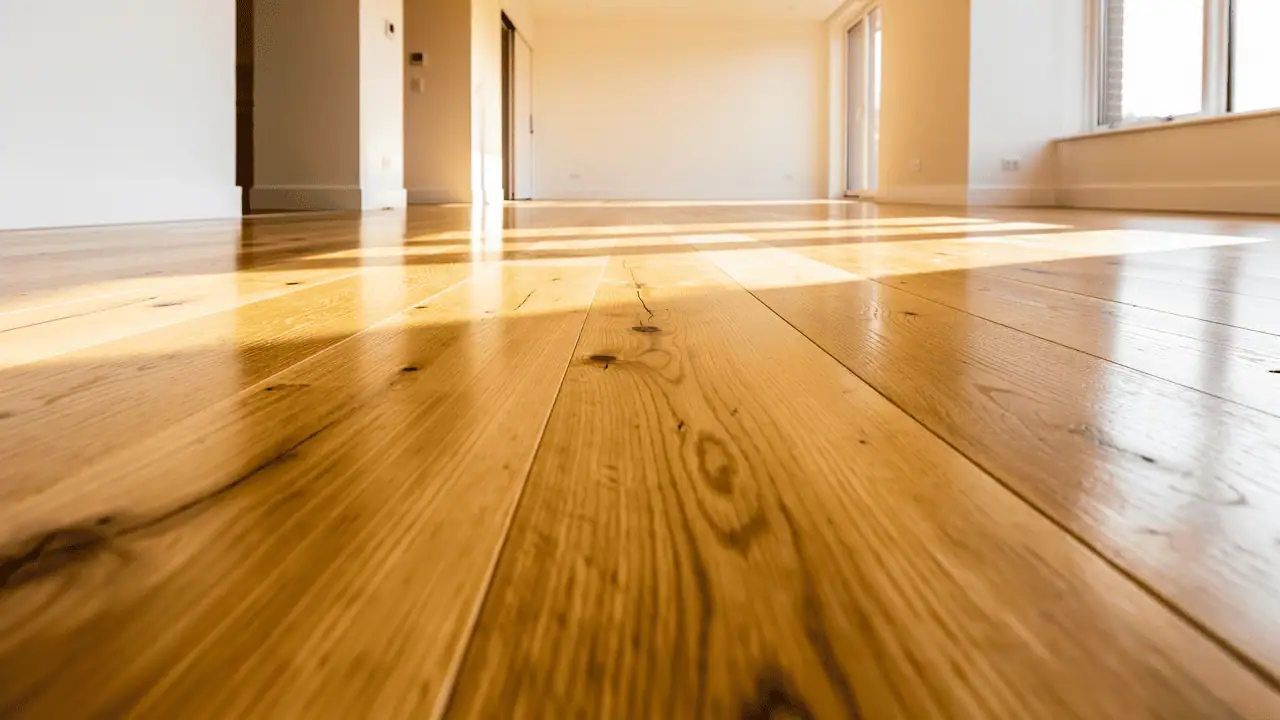
Flooring Installation in Round Rock, TX
Before we quote new flooring in an older Round Rock home, we find out what's already under the carpet. Sometimes it's worth more than what you were going to install.
Whole-home carpet-to-LVP is the most common flooring job we do in Round Rock, and for a lot of these houses it's exactly right. But in the older east-side neighbourhoods there's a check worth doing first.
A share of the pre-1995 stock around Forest Creek and Brushy Creek was built with real hardwood in the entry, dining and hallway, and had carpet laid over it at some point in the nineties or two-thousands. If that's your house, refinishing what's already there is usually cheaper than installing LVP over it and produces a floor that's worth more.
We pull a vent register or lift a corner of carpet in a closet and look before writing the estimate. It takes ten minutes and it occasionally changes the entire project.
What's Actually Under Your Carpet
Four things turn up under carpet in Round Rock homes, and they lead to four different quotes.
Solid hardwood. Refinish it. Sanding and three coats of finish typically costs less than supplying and installing new LVP across the same area, and you end up with a floor buyers pay extra for. Even boards with old carpet tack strip damage at the perimeter usually clean up.
Original ceramic tile set in a thick mortar bed. Common in entries and wet areas in the older stock. This is the expensive one to remove — it comes up in pieces and takes the mortar bed with it. Frequently the better answer is to work around it or float over it rather than demolish it.
Bare slab with adhesive residue. Straightforward. It needs grinding and prep, which is a real line item people forget to budget, but there's no surprise underneath.
Plywood subfloor upstairs. Also straightforward, and the moment to fix squeaks by screwing the subfloor down properly before anything covers it. That's a cheap step that's impossible later.
Slab Prep Is the Line Item Nobody Quotes
The most common reason a new floor looks or feels wrong a year later is that the slab underneath it was never made flat.
Rigid click-lock LVP over a slab with dips will flex at the joints, and eventually those joints separate or the planks develop a hollow sound underfoot. Manufacturers publish a flatness tolerance and every warranty depends on it, which is why a floor that fails on an unprepped slab is usually not a warranty claim.
We measure the slab with a straightedge before quoting and include self-levelling compound where it's needed, as a visible line on the estimate rather than a hidden assumption. Sometimes that number is zero. In an older Round Rock home with a slab that's moved over thirty years, it usually isn't.
If a competing bid is materially cheaper for the same material, the difference is very often this line.
Choosing Between LVP, Tile and Hardwood in Round Rock
LVP is the default for good reason: it's waterproof, it handles dogs and kids, it goes down fast, and the good products look genuinely convincing now. Wear layer is the spec that matters — 20 mil is a reasonable floor for a family home, 12 mil is a rental-grade product regardless of what the pattern looks like.
Tile still wins in wet areas and for people who want a floor that lasts decades rather than years. It costs more to install because the prep and the labour are real, and it's less forgiving of slab movement, so it wants a proper uncoupling membrane.
Hardwood makes sense when you already have it, when the house is in a price bracket where buyers expect it, or when you simply want it. It's the least forgiving of water, which is the argument against it in a kitchen with a dishwasher.
We install all three and we don't earn more on any particular one, so the recommendation you get is based on the house rather than the margin.
What We Have Actually Quoted in Round Rock
Across every priced estimate we have written for a Round Rock address — 49 of them, covering all our services rather than flooring alone.
These are estimates we wrote, not final invoices, and they mix small repairs in with full renovations — which is why the spread is wide. We deliberately do not publish a flooring-only median for Round Rock: the sample for a single service in a single city is too small to mean anything honest. Your number comes from a free on-site walkthrough.
Flooring in Round Rock: Common Questions
Could there be hardwood under my carpet?
In older Round Rock homes, particularly the pre-1995 stock around Forest Creek and Brushy Creek, it's genuinely common in entries, dining rooms and hallways. We check before quoting by pulling a vent register or lifting a corner of carpet in a closet. If it's there and sound, refinishing usually costs less than new LVP over the same area and produces a more valuable floor. It takes ten minutes to find out.
Why is one flooring quote so much cheaper than another?
Most often it's slab preparation. Click-lock LVP needs a slab flat within the manufacturer's tolerance, and older Round Rock slabs frequently aren't. Self-levelling compound is a real cost, and leaving it out makes a bid look competitive while guaranteeing flexing joints and hollow spots within a year or two — which typically isn't a warranty claim, because the failure was the prep. Ask any bidder to show the prep line specifically.
Do I have to remove the old tile in my entry?
Not always, and in older Round Rock homes you often shouldn't. Original ceramic set in a thick mortar bed is expensive to demolish because it comes up in pieces and takes the bed with it. Depending on the height relationships to adjoining rooms and doorways, floating the new floor over it or working around it can be both cheaper and better. We look at the transitions and give you both numbers.
How long does whole-home flooring take in Round Rock?
A single room is 1–2 days. A whole-home carpet-to-LVP conversion in a typical Round Rock house runs 3–7 days depending on square footage, how much slab prep is needed, and whether tile has to come out. Tile removal and hardwood refinishing both add days and both are dusty, so we plan containment and tell you which days are the disruptive ones before we start.