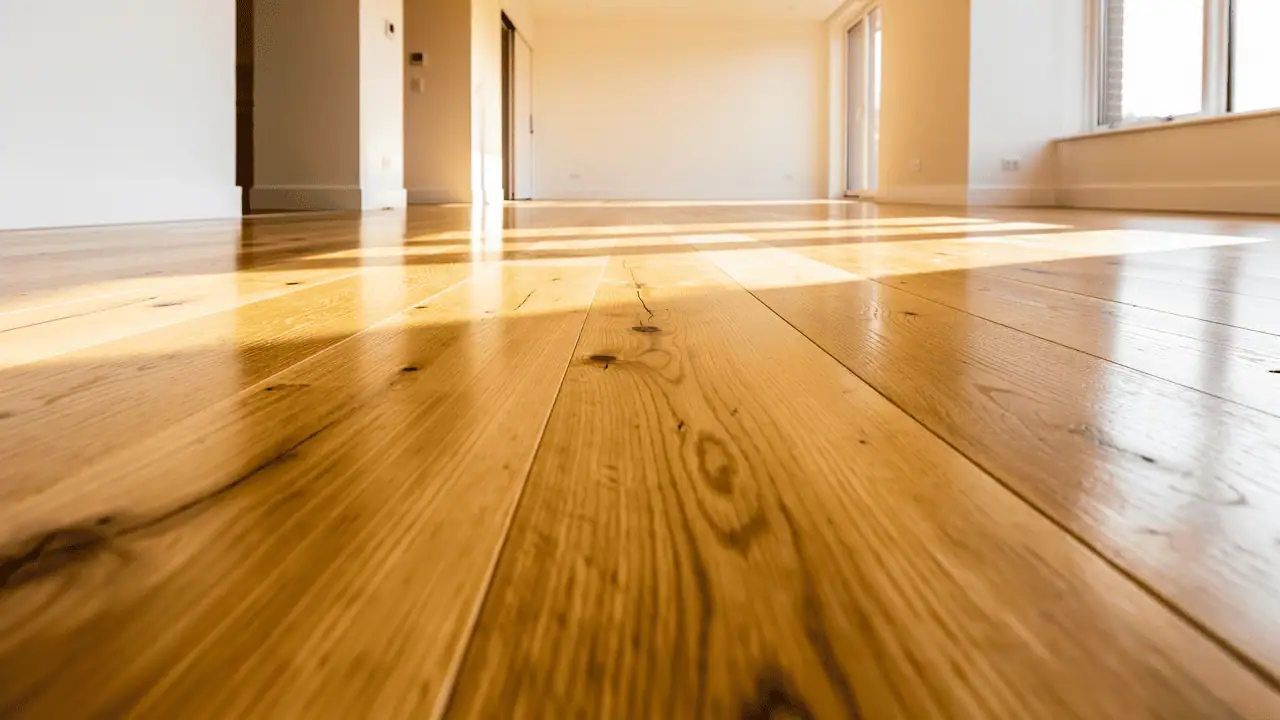
Flooring Installation in Leander, TX
Nearly every Leander flooring job we quote starts the same way: getting the builder carpet out of the upstairs.
Production builders in Leander have followed the same specification for years — tile or LVP through the downstairs living areas, and carpet everywhere upstairs plus the stairs themselves. It hits a price point and it's fine on move-in day. Five years and a couple of children later, the upstairs carpet is the thing everybody wants gone.
So the typical Leander project is the inverse of what we do in older suburbs. There's no tile to demolish, no hardwood hiding under anything, and the slab is young and generally flat. The work is upstairs, on a plywood subfloor over engineered trusses, and the issues are completely different: squeaks, sound transmission, and stairs.
Hard Flooring Upstairs Makes the House Louder
This is the thing nobody mentions until after the carpet is gone. Carpet and its pad are the most effective sound absorber in the house. Replace it with LVP over a plywood subfloor and two things change immediately: footsteps become clearly audible in the room below, and the general acoustic of the upstairs gets harder and more echoing.
It surprises people, and in a full house it can genuinely matter — a bedroom above a living room where someone works evenings is a real consideration.
The fix is an acoustic underlayment rated for impact sound, laid under the LVP. It costs a modest amount per square foot and it makes a substantial, immediately audible difference. Some LVP products come with a pad pre-attached, and those pads are generally adequate for comfort but not for impact sound between floors.
We raise this before quoting rather than after installing, and we price the upgraded underlayment as its own line so you can decide with the number in front of you.
Fix the Squeaks While the Floor Is Open
Newer Leander homes are framed with engineered floor trusses and a plywood or OSB subfloor, and squeaks in that assembly are common — usually a fastener that has worked loose or a panel that wasn't fully bonded to the truss below.
Once the carpet is up, that subfloor is completely exposed and fixing it is trivial: walk it, find the movement, and screw the panels down into the trusses properly. It takes a fraction of a day and it costs very little.
Once the new floor is down, the same repair means pulling up the new floor.
We do this as standard on every upstairs carpet-to-hard-surface conversion in Leander rather than offering it as an extra, because the moment is free and the alternative is expensive. It's the clearest example of something that's cheap at the right time and painful at any other.
Stairs Are Their Own Project
The stairs are usually the biggest single line on a Leander flooring estimate and the one that surprises people most.
Builder stairs are carpeted over a rough stringer and unfinished treads that were never meant to be seen. Converting them to LVP or wood means a proper tread and riser system with a finished bullnose on every step — you can't simply run plank across them. That's real material and real labour per step, and a typical Leander flight with a landing is fifteen to twenty steps.
There's also a decision to make: matching the stairs to the new upstairs floor, or treating them as a feature with a contrasting stained wood tread and painted riser. The second option costs more and looks considerably better, and in a house where the stairs are visible from the entry it's usually the one worth doing.
We price stairs separately and show both options, because it's a genuine choice rather than a technical requirement.
What We Have Actually Quoted in Leander
Across every priced estimate we have written for a Leander address — 32 of them, covering all our services rather than flooring alone.
These are estimates we wrote, not final invoices, and they mix small repairs in with full renovations — which is why the spread is wide. We deliberately do not publish a flooring-only median for Leander: the sample for a single service in a single city is too small to mean anything honest. Your number comes from a free on-site walkthrough.
Flooring in Leander: Common Questions
Will replacing upstairs carpet with LVP make my Leander home noisier?
Yes, noticeably, unless you plan for it. Carpet and pad are the best sound absorption in the house, and hard flooring over a plywood subfloor makes footsteps clearly audible in the room below. An acoustic underlayment rated for impact sound solves it for a modest cost per square foot. The pre-attached pads on many LVP products are fine for underfoot comfort but not for sound between floors. We flag this before quoting.
Can you fix the squeaky upstairs floor while replacing the carpet?
Yes, and it's the right moment. With the carpet up the subfloor is fully exposed, so finding the loose panels and screwing them properly into the engineered trusses takes a fraction of a day and costs very little. Doing the same repair after the new floor is down means pulling the new floor up. We include it as standard on upstairs conversions rather than selling it as an extra.
Why do the stairs cost so much?
Because they're priced per step and they need a real tread and riser system, not plank cut to length. Builder stairs in Leander are carpeted over rough stringers with treads that were never meant to be visible, so converting them means finished treads with a proper bullnose on every step. A typical flight with a landing is fifteen to twenty steps. We show stairs as a separate line and give you both the matching and the contrasting-wood options.
Does my newer Leander slab need levelling before LVP?
Usually much less than an older home, which is one genuine advantage of newer construction. We still check it with a straightedge before quoting rather than assuming, because a young slab isn't automatically a flat one. Where it's within the manufacturer's tolerance the levelling line on your estimate is zero, and we'd rather show you that than pad the quote with prep you don't need.