- Texas has no state license for general contractors — verify trade licenses (TDLR, TSBPE), insurance, and references instead
- General liability insurance (min $1M) protects your property during the project
- Get 3 written estimates — the cheapest is rarely the best value
- A legitimate contractor never asks for more than 30% upfront
- Check Google and BBB reviews — look for responses to negative reviews
1. Understand Texas Licensing (There Is No GC License)
Here's the fact most homeowners don't know: Texas has no state license for general contractors or remodelers. Anyone with a truck and business cards can legally call themselves a contractor here. That's not a scare line — it just means the state hasn't pre-screened anyone for you, so the vetting burden is yours.
What IS licensed in Texas: electricians and HVAC contractors, verifiable at tdlr.texas.gov, and plumbers, verifiable at tsbpe.texas.gov. If your project touches those trades, the person doing that portion must hold the license. Ask directly who is doing the electrical or plumbing, get the license number, and look it up — it takes about 30 seconds.
One more real credential: the City of Austin requires contractors to register with Development Services before they can pull residential building permits. Registration isn't a competency exam, but a contractor who can't pull an Austin permit is telling you something.
2. Require a Certificate of Insurance
Ask for a Certificate of Insurance showing general liability (minimum $1M per occurrence) and workers' compensation coverage. Have it emailed directly from their insurance broker — not just a photo of a certificate the contractor hands you.
If a worker is injured on your property and the contractor has no workers' comp, the claim can come back to your homeowner's insurance. This is not theoretical — it happens in Austin regularly.
In a state with no GC licensing, the insurance certificate does double duty: it protects you, and it's a basic seriousness filter. Uninsured operators don't survive that one question.
3. Get Three Written Estimates
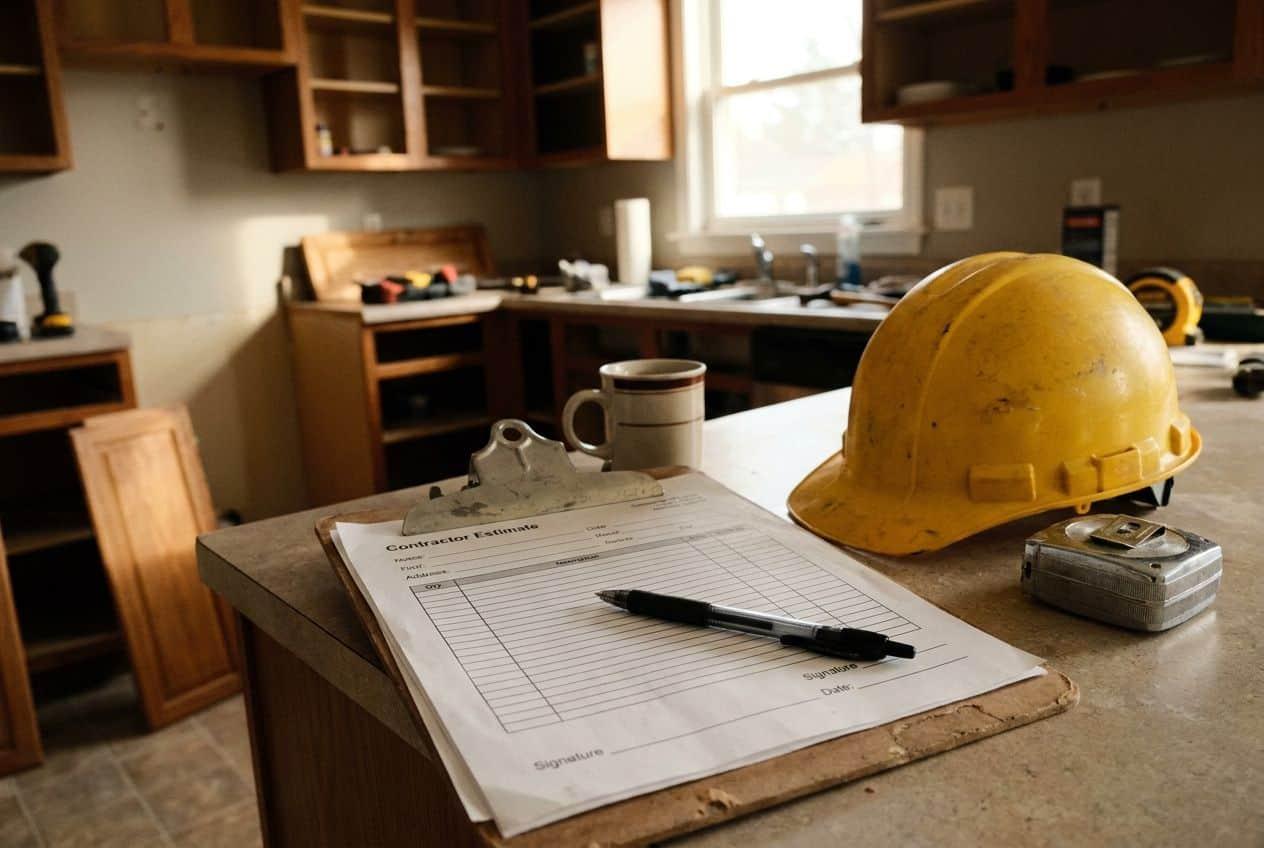
Always get at least three written estimates for any project over $5,000. Written estimates — not verbal, not 'ballpark' — with specific line items. This gives you price context and reveals scope differences between contractors.
The cheapest estimate isn't the best value if it excludes permit fees, has thin allowances for materials, or lacks a clear scope. Compare what's included, not just the total.
4. Check the Payment Schedule
Legitimate contractors ask for a deposit (typically 25–30% to mobilize), progress payments tied to project milestones, and a final payment upon completion — usually 10–15% held until punch list is done.
Red flag: any contractor who asks for more than 50% upfront, or who wants full payment before starting. This structure removes your leverage to get punch list items finished.
Get the payment schedule in writing as part of your contract.
5. Read the Contract Before Signing
A solid remodeling contract covers: detailed scope of work, materials specified by brand/model where possible, project start and completion dates, payment schedule, change order process, warranty terms, and permit responsibility.
If a contractor offers only a one-page proposal with a total price, ask for more detail before signing. Vague contracts lead to scope disputes and budget surprises.
ATX Construction provides detailed written contracts for all projects.
6–10. Timeline, References, Permits, Change Orders, Cleanup
6. Get a written timeline. Project start date, major milestones, and estimated completion — in writing. 'A few weeks' is not a timeline.
7. Ask for references. Any contractor should be able to provide 2–3 recent clients who'll talk to you. Call them. Ask about communication, timeline adherence, and how problems were handled. In a no-license state, references carry the weight a license would elsewhere.
8. Confirm permit responsibility. Ask directly: 'Are permits required for this project, and who is responsible for pulling them?' The contractor should be responsible for permits on any project they manage.
9. Understand the change order process. Scope changes happen. A professional contractor documents every change in a written change order with price and timeline impact before proceeding — not after.
10. Ask about cleanup and protection. Daily cleanup, dust protection, and post-project removal of materials should be standard. Ask what's included.
Red Flags That Should End the Conversation
- Big cash deposits. More than 50% up front, or cash-only pricing.
- No paper. No written estimate, no contract, no certificate of insurance.
- Permits are your problem. Any version of 'we can skip the permit to save money.' You're the one who owns the house when it sells.
- A price dramatically below every other bid. In a market with no GC licensing, the cheap bid is where unlicensed electrical work and skipped prep hide.
- Pressure to sign today. Legitimate contractors in Austin have backlogs. Discounts that expire tonight are a sales tactic, not a deal.
- No verifiable footprint. No local address, no reviews across Google and the BBB, no completed jobs you can drive past.
None of these guarantees a bad outcome. All of them shift the odds against you — and with a full remodel on the line, you don't need to take that bet.
Frequently Asked Questions
What's a fair payment schedule for a remodel?
25–30% deposit to start, progress payments at defined milestones (typically 25–30% each), and 10–15% held as a final payment upon satisfactory completion. Never pay more than 50% before work begins, and always hold something back until punch list items are resolved.
What should a remodeling contract include?
At minimum: detailed scope of work, materials specifications, start and end dates, payment schedule, change order process, warranty on labor, permit responsibility, and dispute resolution. If any of these are missing, ask for them to be added before signing.
How do I spot a contractor scam?
Key red flags: demands for large upfront payment (over 50%), no written contract or certificate of insurance, pressure to decide immediately, no local address or verifiable reviews, significantly cheaper than all other bids, and any suggestion that permits 'aren't required' when they clearly are. Remember that Texas doesn't license general contractors — nobody has pre-screened them for you.
What do I do if contractor work is substandard?
Document everything with photos, put your concerns in writing (email), and reference the contract specifications. Give the contractor a formal opportunity to correct the work. If they refuse: for licensed trade work (electrical, plumbing, HVAC), file a complaint with TDLR or the state plumbing board. For general remodeling work there's no state licensing board — your leverage is the contract, so pursue its dispute resolution process, and consult a construction attorney for significant amounts.
Ready to Start Your Project in Austin?
Get a free estimate from ATX Construction — Austin's licensed, insured remodeling contractor. No pressure, no obligation.