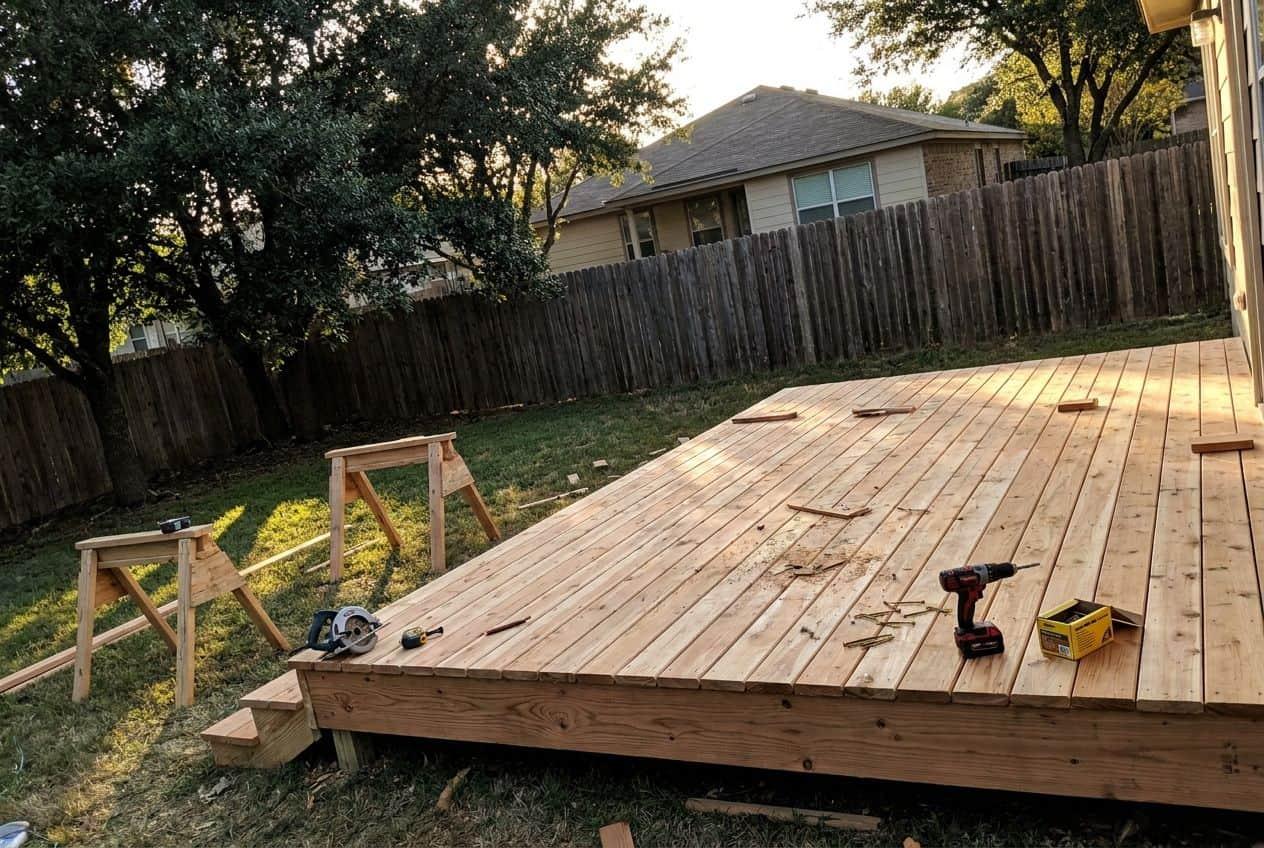
- Pressure-treated wood decks in Austin cost $8,000–$20,000
- Composite decks (Trex, TimberTech) cost $15,000–$35,000 but require minimal maintenance
- Most Austin decks need permits — ATX Construction handles the application
- Across 26 estimates we wrote in the last 12 months that included deck work, the median was $12,395
- A well-built deck adds 65–75% of its cost to home resale value
What ATX Actually Quoted in the Last 12 Months
Deck pricing varies more than any other service we offer, so here are our real numbers. Over the last 12 months we wrote 26 estimates that included deck work in the Austin area:
- A quarter came in under $5,352
- The median was $12,395
- Three quarters came in under $28,623
- The top 10% came in above $72,666
Two things to know about those numbers. First, 26 estimates is a smaller sample than our kitchen or flooring data, so treat the brackets as directional. Second, they include everything from board replacement and railing repairs at the low end to large composite decks with covered structures at the high end — including decks that were one piece of bigger outdoor living projects.
For a straightforward new build: a mid-size pressure-treated deck typically lands at $8,000–$20,000, and the same footprint in composite runs $15,000–$35,000.
Wood vs. Composite: The Austin Deck Decision
Pressure-treated wood is the budget-friendly entry point. It builds well, looks natural, and costs $8,000–$20,000 for a typical 12×20 ft deck in Austin. The catch: Austin's brutal summers fade and crack untreated wood fast. Plan on annual staining and periodic board replacement after 8–10 years.
Composite decking (Trex, TimberTech, Fiberon) costs more upfront — $15,000–$35,000 for the same footprint — but requires almost no maintenance. It won't fade, crack, or splinter, and carries 25–30 year warranties. In Austin's heat, composite is increasingly the preferred choice for homeowners who don't want annual deck maintenance.
Cedartone and Ipe (hardwood) are premium wood alternatives at $20,000–$40,000+ — beautiful but require specialized care.
Deck Cost by Size
Small deck (10×12 ft, ~120 sqft): $6,000–$14,000. Good for a single outdoor table and chairs. Common on smaller East Austin lots.
Medium deck (12×20 ft, ~240 sqft): $10,000–$22,000. The most common size in Austin — fits a full outdoor dining setup. Composite at this size runs $18,000–$22,000.
Large deck (16×24 ft or larger, 380+ sqft): $18,000–$40,000+. Often combined with a pergola or shade structure. Multi-level decks add 20–30% to cost due to additional framing.
Add-ons that Austin homeowners commonly include: built-in bench seating ($800–$2,500), pergola or shade cover ($4,000–$12,000), outdoor lighting ($500–$2,000), outdoor kitchen rough-in ($1,500–$4,000).
Austin Deck Permits and the Process
Most decks in Austin require a building permit. The threshold is generally any deck attached to the house or over 30 inches above grade — which covers nearly every project we build.
Permit fees run $150–$400 in Austin. The City of Austin's turnaround is typically 2–4 weeks for residential deck permits. We submit the permit application as part of your project — you don't have to navigate the city portal.
HOA approval is separate from city permits. If your neighborhood has an HOA, we can help you prepare the documentation they need, but HOA timelines vary and are outside our control.
After issuance, expect inspections at set milestones: footing holes before concrete is poured, framing before deck boards go down, and a final at completion. We schedule and attend all of them.
One narrow exception worth knowing: a freestanding deck under 200 sqft that sits less than 30 inches above grade, isn't attached to the house, and doesn't serve a required exit door generally doesn't need a permit. Most real-world decks don't fit that box — when in doubt, verify with Development Services before building.
Where the Money Goes
Rough split on a new deck build:
- Pressure-treated wood deck: roughly 40–50% materials, 50–60% labor.
- Composite deck: roughly 55–65% materials, 35–45% labor. The boards and railing systems cost roughly two to three times what wood does, while the labor to install them is similar.
Either way, the frame underneath — footings, posts, beams, joists — represents about a third of the total project, and it's pressure-treated lumber on both wood and composite decks. That frame is where structural quality lives, and it's exactly where low bids save their money: fewer footings, undersized joists, wider spacing. You can't see any of it in the finished photos, which is the point.
The rest of the budget: permit fees ($150–$400 in Austin), demolition and haul-off if an old deck is coming out, and railing — which people forget to mentally budget even though code requires it on anything 30 inches or more above grade.
Ways to Keep Deck Costs Down
- Keep the shape simple. Every corner, angle, and level change adds framing labor. A clean rectangle buys the most deck per dollar.
- Stay low where the yard allows. Taller decks need bigger posts, more bracing, stairs, and railing on every edge.
- Design to standard board lengths. Decking comes in 12-, 16-, and 20-foot lengths. A 12×16 deck wastes almost nothing; a 13×17 deck pays for a lot of offcuts.
- Re-deck over a sound frame. If the posts, beams, and joists are healthy, new boards and railing deliver a new-looking deck for a fraction of a rebuild — and composite boards can go over a solid wood frame.
- Add the extras later. Benches, planters, pergolas, and lighting can all be phased in. The footprint can't easily change, so get the size right and defer the accessories.
Where not to save: footings and framing. That's the part holding your family and your furniture off the ground.
Maintenance Reality for Austin Decks
Wood decks in Austin need annual cleaning and staining/sealing to survive the heat and UV exposure. Budget $300–$600 per year for a professional cleaning and seal coat, or do it yourself with $80–$150 in materials.
Neglected wood decks deteriorate fast in Texas. We've seen 5-year-old decks that needed full board replacement because they were never stained. If you don't want the maintenance commitment, composite is the honest recommendation.
Composite decks need occasional cleaning (power wash once a year) — that's essentially it. The higher upfront cost buys you back years of weekends.
Frequently Asked Questions
Do I need a permit for a deck in Austin?
Yes, in almost all cases. Any deck attached to the house or over 30 inches above grade requires a building permit in Austin. Permits cost $150–$400 and take 2–4 weeks. ATX Construction handles the permit application as part of your project.
How long does deck construction take?
A standard 240 sqft deck takes 3–5 days of active construction. Total project timeline from signed contract to completion is typically 3–5 weeks, accounting for permit approval and material delivery. Composite decking materials sometimes have 1–2 week lead times.
Is composite or wood better for Austin weather?
Composite holds up significantly better in Austin's heat and UV exposure. Wood decks fade, crack, and require annual staining to stay looking good. If you want minimal maintenance, composite is the right call. If budget is the primary driver, pressure-treated wood with a commitment to annual care is a solid option.
My deck is damaged — should I repair or replace?
If the structural frame (posts, joists, beams) is solid and less than 40% of the boards need replacement, repair usually makes sense. If the frame is rotting or more than half the boards are compromised, a full replacement is better value. We'll assess both scenarios in your estimate so you can make the call.
What do decks actually cost in Austin in 2026?
Across 26 estimates we wrote over the last 12 months that included deck work, the median was $12,395. A quarter came in under $5,352 — mostly repairs and re-decking — and the top 10% came in above $72,666, driven by large composite builds and decks inside bigger outdoor living projects. A typical new mid-size wood deck lands between $8,000 and $20,000.
Can I build a deck without a permit in Austin?
Only in narrow cases. The general exemption is a freestanding deck under 200 sqft, under 30 inches above grade, not attached to the house, and not serving a required exit door. Anything attached to the house or taller than 30 inches needs a permit. Verify your specific situation with Austin Development Services — unpermitted attached decks are a common flag in pre-sale inspections.
Ready to Start Your Project in Austin?
Get a free estimate from ATX Construction — Austin's licensed, insured remodeling contractor. No pressure, no obligation.