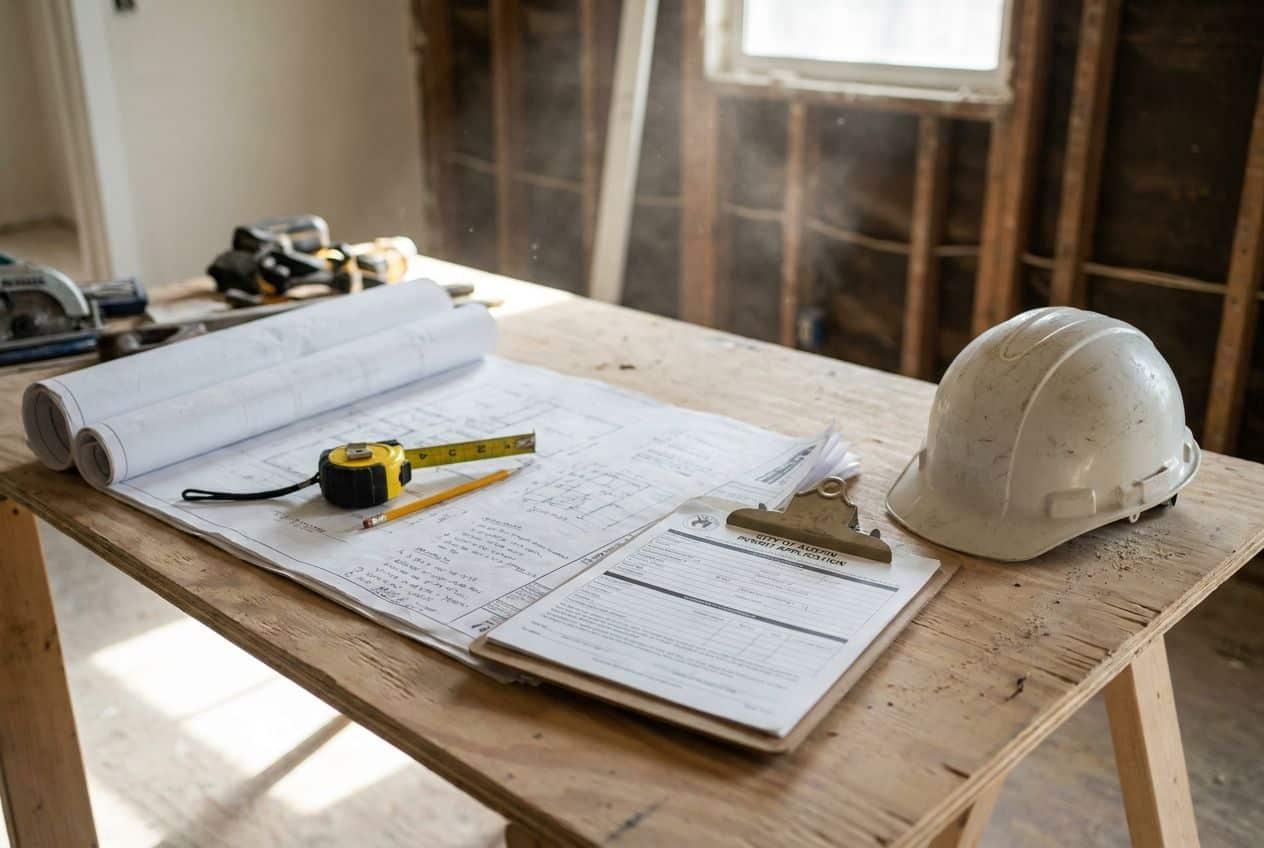
- Austin requires permits for structural changes, electrical panel work, and plumbing relocations
- Cosmetic work (paint, flooring, countertops) generally doesn't need a permit
- Deck permits cost $150–$400 in Austin and take 2–4 weeks
- Working without a required permit can prevent selling your home
- ATX Construction handles all permit applications as part of your project
What Requires a Permit in Austin
The City of Austin requires permits for any work that affects the structure, safety systems, or building envelope of your home. In practice, this means:
- Any structural changes (removing walls, adding openings, header work)
- Electrical panel upgrades, new circuits, or service changes
- Plumbing relocations (moving a toilet, relocating a drain stack)
- New decks, additions, or accessory structures
- HVAC equipment replacement or new ductwork
- Window or door enlargements that affect structure
The permit requirement applies regardless of whether you hire a contractor or do the work yourself.
Two that surprise homeowners: water heater replacement requires a plumbing permit in Austin, and an HVAC changeout requires a mechanical permit — even though both feel like like-for-like swaps. The licensed plumber or HVAC contractor pulls these, usually online, and they're typically issued fast.
What Typically Doesn't Need a Permit
Cosmetic and like-for-like replacement work generally doesn't require a permit in Austin:
- Interior painting, wallpaper, tile, flooring
- Countertop replacement (no plumbing relocation)
- Cabinet replacement in the same location
- Fixture replacement (same location, same type)
- Fence replacement under 6 feet (rules vary by neighborhood and HOA)
- Minor drywall repair
When in doubt, call Austin's Development Services Department or ask your contractor. The cost of a permit is trivial compared to the cost of unpermitted work discovered at sale time.
How the Austin Permit Process Works, Step by Step
Austin runs permitting through an online portal — Austin Build + Connect (AB+C). Here's the process as it actually goes, as of 2026:
1. Confirm what the project needs. Remodels typically involve a residential building permit plus trade permits (electrical, plumbing, mechanical) as the scope requires. Trade permits are pulled by the licensed tradesperson doing that portion of the work. 2. Prepare the application. Residential applications require a scope of work description, a site plan or survey where the footprint changes, and the contractor's registration information. Larger projects — additions, structural changes — need engineered drawings. 3. Submit through AB+C and wait for review. Simple residential remodel permits typically take 2–4 weeks as of 2026. Complex projects run 4–8 weeks, and each round of city review comments adds time. Standalone trade permits (a water heater changeout, a panel swap) are usually much faster — often issued the same day online. 4. Pay fees and post the permit. Residential remodeling permit fees typically run $150–$600 depending on scope. 5. Pass inspections at milestones. Framing before drywall, electrical rough-in before insulation, final inspection at completion. The permit closes when the final passes.
ATX Construction handles this entire sequence — application, fees, inspection scheduling, and being on site for every inspection. You don't touch the portal.
City of Austin vs. Travis County: Which Rules Apply to You
Your address decides the rulebook. Inside Austin city limits, the City's Development Services Department has jurisdiction and everything in this guide applies.
In unincorporated Travis County, there is no county residential building permit for remodeling — Texas counties generally can't require building permits for single-family homes. You'll still deal with permits for septic systems (OSSF), floodplain development, and driveways onto county roads, and state law still requires licensed electricians and plumbers for that work regardless of where the house sits.
Between the two sits Austin's ETJ (extraterritorial jurisdiction), where limited city rules apply, and suburbs like Round Rock, Pflugerville, and Cedar Park run their own permit offices with their own timelines — often faster than Austin's.
Not sure which bucket your address falls in? Look it up on the county appraisal district site, or ask us — it changes the paperwork, not the quality standard the work should meet.
Consequences of Skipping Permits
Unpermitted work creates real problems when you sell. Austin requires sellers to disclose known unpermitted work. A buyer's inspector who flags unpermitted electrical or structural work will trigger renegotiation — often for more than the permit would have cost.
In serious cases, the city can require unpermitted work to be opened up, inspected, and potentially redone. We've seen homeowners pay twice for the same work because a previous contractor skipped permits.
For remodeling work done before you owned the home: if you're unsure, a permit history search (available through the city) will show what was pulled. This is worth doing before you buy, especially on older homes with obvious renovations.
Frequently Asked Questions
What happens if I get caught doing unpermitted work?
The city can issue a stop-work order, require you to open walls for inspection, and fine you for the violation. Unpermitted work also creates liability at resale and can invalidate homeowners insurance claims for related damage. The permit fee is almost always worth it.
How long do permits take in Austin?
Standard residential remodeling permits take 2–4 weeks from application to issuance. Complex projects with structural components or engineering requirements can take 4–8 weeks. We account for permit timing in every project schedule we provide.
Does the permit cost extra on my project?
ATX Construction includes permit fees in project estimates — you won't get a surprise bill from us. Permit fees are set by the city and typically run $150–$600 for residential remodeling depending on scope. We handle the application as part of your project.
What about HOA approvals — are those the same as permits?
No. HOA approval and city permits are completely separate. Many Austin neighborhoods have HOAs that require architectural review for exterior changes — decks, fences, paint colors, additions. HOA approval timelines vary (2–8 weeks is common) and we help homeowners prepare the documentation, but HOA decisions are outside our control.
Can a homeowner pull their own permit in Austin?
Yes. Austin allows owner-occupants to pull homeowner permits for work on their own homestead, including some trade work they perform themselves, subject to the same inspections as any contractor. The catch: whoever pulls the permit is responsible for the work passing inspection. When a contractor runs the project, the contractor should pull the permit — be wary of one who asks you to pull it for them.
Ready to Start Your Project in Austin?
Get a free estimate from ATX Construction — Austin's licensed, insured remodeling contractor. No pressure, no obligation.